
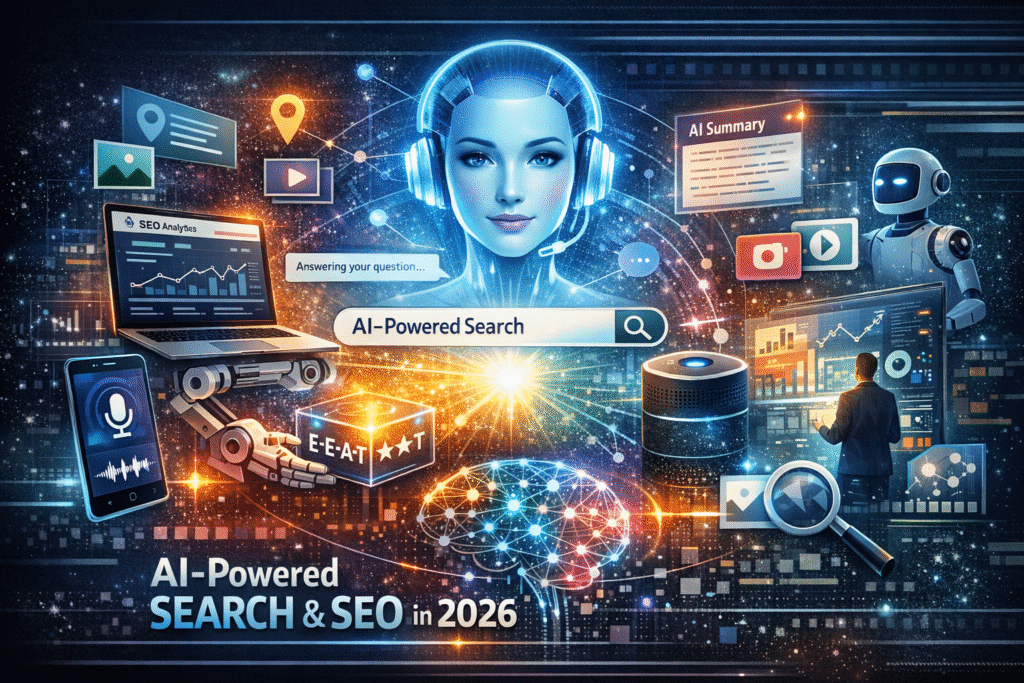
AI-Powered Search & SEO represents a major shift in how search engines discover, interpret, and present information to users. Unlike traditional search systems that relied heavily on keywords and backlinks, modern AI-driven search engines use machine learning, natural language processing, and deep learning to understand search intent, context, and user behavior at a much deeper level. In 2026, search engines are no longer just information retrieval tools; they act as intelligent assistants that provide direct, conversational, and personalized answers. This evolution has significantly changed how SEO experts approach optimization, content creation, and digital visibility.
One of the most important changes introduced by AI-powered search is the rise of intent-based search results. Search engines now analyze the meaning behind a query instead of matching exact keywords. For example, when a user searches for a solution to a problem, AI understands whether they want informational content, a product comparison, a local service, or a quick answer. As a result, SEO strategies must focus on search intent modeling, topic depth, and content relevance. Creating content that clearly solves problems, answers questions, and aligns with user expectations is more important than keyword density or repetition.
Generative AI has also transformed how search results are displayed. With features like Search Generative Experience (SGE), AI-generated summaries appear at the top of search results, providing users with instant answers. These summaries pull information from multiple trusted sources, reducing the need for users to click on traditional links. For SEO professionals, this means optimizing content to be included in AI summaries and featured responses. Structured content, clear headings, concise explanations, and authoritative insights increase the chances of being referenced by AI-driven search results.
Content quality has become a defining factor in AI-powered SEO. Search engines evaluate content based on Experience, Expertise, Authoritativeness, and Trust (EEAT). AI systems are designed to detect originality, depth, and real-world experience in content. Thin, generic, or mass-produced AI content without human insight struggles to perform well. Successful SEO strategies combine AI tools for research and optimization with human creativity, industry knowledge, and storytelling. This human-AI collaboration ensures content remains valuable, credible, and aligned with search engine quality standards.
Voice search and conversational queries are another major influence of AI-powered search. With the increasing use of smart assistants and voice-enabled devices, users are searching in a more natural and conversational manner. These searches are often longer and phrased as questions. To optimize for voice search, SEO experts focus on natural language content, FAQ sections, and clear, direct answers. AI-driven search engines prioritize content that can be easily understood and spoken aloud, making clarity and simplicity essential.
AI-powered search has also expanded beyond text. Multimodal search allows users to search using images, videos, and voice together. Visual search technologies enable users to find information by uploading photos or using their camera in real time. For SEO, this means optimizing images, videos, and visual metadata alongside written content. Proper file names, alt text, structured data, and high-quality visuals help AI systems understand and rank visual content more effectively. Video SEO, especially for platforms like YouTube and short-form video search, plays a growing role in visibility.
User experience has become a core ranking factor in AI-driven SEO. AI algorithms analyze user behavior signals such as click-through rates, dwell time, bounce rates, and interaction patterns. A website that loads quickly, works seamlessly on mobile devices, and offers intuitive navigation is more likely to perform well. AI systems aim to deliver the best possible experience to users, so technical SEO, Core Web Vitals, and usability are directly linked to search performance. SEO experts must work closely with designers and developers to create fast, user-friendly websites.
Data and automation play a critical role in AI-powered SEO strategies. AI tools help analyze large datasets, predict trends, and identify optimization opportunities faster than manual methods. SEO professionals use AI for keyword clustering, content optimization, competitor analysis, and performance forecasting. However, relying solely on automation can be risky. Human oversight is essential to interpret insights, maintain brand voice, and ensure ethical SEO practices. The most effective SEO strategies balance automation with strategic decision-making.
In conclusion, AI-Powered Search & SEO is redefining the future of digital visibility. It shifts the focus from traditional ranking tactics to intent, experience, and trust. As search engines continue to evolve into intelligent, conversational platforms, SEO experts must adapt by creating meaningful, authoritative, and user-centric content. Those who embrace AI as a strategic partner rather than a replacement will gain a competitive advantage. In 2026 and beyond, success in SEO depends on understanding how AI thinks, how users search, and how to deliver real value in an increasingly intelligent search ecosystem.